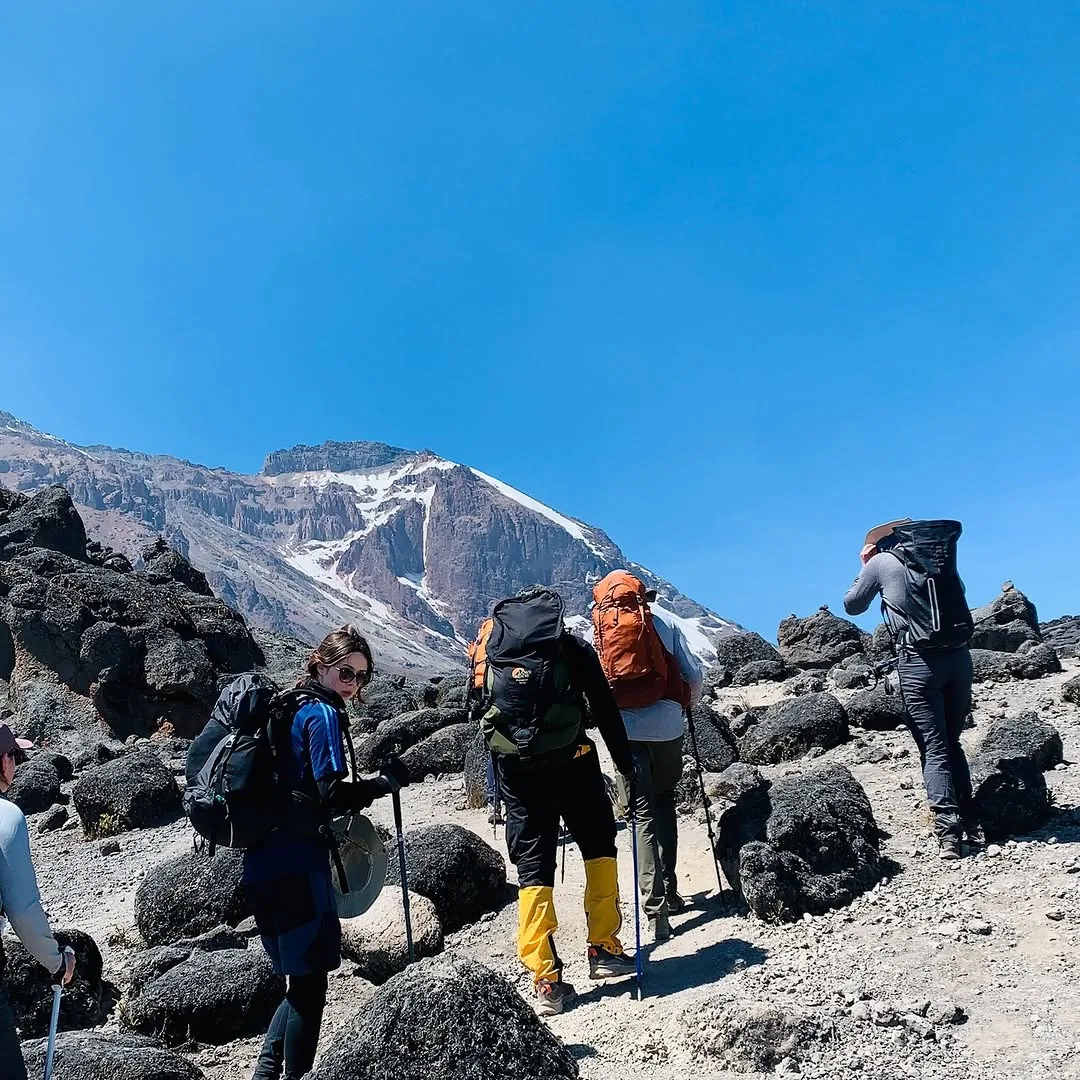
Pack for changing mountain conditions
Kilimanjaro passes through different climate zones, so the most useful packing strategy is a flexible layering system rather than one heavy outfit. Your final checklist should always be checked against the confirmed route, season and equipment supplied by your operator.
Layering
Plan moisture-managing base layers, insulating mid-layers and an outer layer that protects against wind and rain. Warm summit clothing is especially important because temperatures and wind exposure can be very different from the lower slopes.
Footwear
Use supportive trekking footwear that has already been broken in before the trip. Comfortable socks and a plan for keeping feet dry can matter as much as the boots themselves.
Rain and sun protection
A waterproof shell, pack protection, sun hat, sunglasses and suitable sunscreen belong in the core kit. Conditions can change quickly, so items needed during the walking day should remain accessible rather than buried deep in luggage.
Hydration and personal items
Carry the hydration system recommended for your route and keep personal medication, hygiene items and small essentials organized. Ask in advance which technical items are included and which must be brought or hired.
Do a final gear check before departure
Lay out the full kit before travel and compare it with your confirmed operator checklist. This is the best time to identify missing items, weight problems or equipment that still needs testing.